Jesus Christ Floral Mandala
A Designer’s First Glance: Serene, Sacred, and Surprisingly Versatile
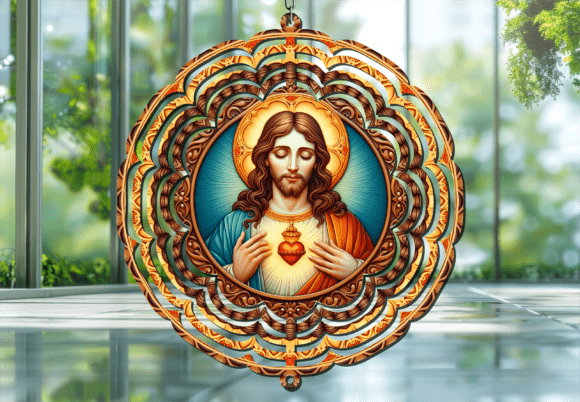
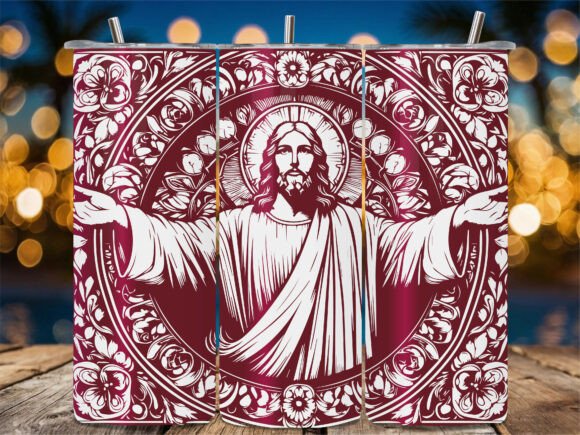
When Jesus Christ Floral Mandala opens in my embroidery software, the first thing that strikes me isn’t just its symmetry—it’s its quiet confidence. This isn’t a loud, graphic statement piece. It’s a layered, meditative composition: a central Christ figure softly integrated into an intricate floral mandala—petals curling like prayers, vines echoing sacred geometry, and delicate negative space holding breath between elements. The mood is reverent but warm; traditional yet fresh enough for modern handmade products. As a designer who regularly selects embroidery files for client projects and small-batch production, I immediately see its natural home: nursery wall hangings, linen tea towels for faith-based boutiques, minimalist sweatshirt fronts for quiet contemplation—not bold streetwear.
How It Stitches Up: Real-World Performance on Common Projects
I tested Jesus Christ Floral Mandala across three real-life scenarios: a medium-weight organic cotton tote bag (for a local church gift shop), a brushed poly-cotton baby onesie (as a personalized baptism gift), and a 4” x 4” twill patch for a small faith-centered apparel line. On the tote, it stitched cleanly with moderate stitch density—no puckering, no thread breaks. The satin-stitched petals held crisp edges, and the central figure retained subtle dimension without overwhelming the fabric. On the onesie? That’s where attention to detail mattered most. I used lightweight cutaway stabilizer and reduced top tension slightly—critical for baby embroidery. The design’s balanced fill stitch distribution prevented stiffness, and the overall look felt tender, not heavy.
As a patch, it performed beautifully when heat-applied to structured twill. The outer floral ring framed the figure perfectly, giving visual weight even at 3.5”. For Etsy sellers or craft fair vendors, this makes Jesus Christ Floral Mandala a strong candidate for ready-made embroidered patches—especially paired with neutral linen or oatmeal canvas. It also works well as a sweatshirt embroidery centerpiece, provided you avoid overly bulky fleece backs. Its scale and rhythm translate well to printable mockups, helping craft business owners present cohesive digital previews without overpromising detail.
Where to Use It Thoughtfully—Not Everywhere
This design shines brightest when given room to breathe. Don’t force Jesus Christ Floral Mandala into a 2.5” hoop for a curved cap front—it loses nuance in the crown curve, and fine vine details risk distortion. Similarly, avoid thin, loosely woven fabrics like challis or lightweight rayon without extra stabilizer: the dense inner fill areas can cause shadowing or pull. On dark fabric, test contrast carefully—some lighter thread palettes (ivory, soft gold) read beautifully; others fade into ambiguity. And while it’s lovely on kitchen towels, skip it on heavily textured terry cloth unless you’re willing to add a second layer of tear-away under the hoop.
Also note: the delicate linework around the figure’s hands and halo demands steady machine calibration. If your commercial embroidery setup tends toward aggressive stitch speeds, slow it down for the final 20% of stitching. This isn’t a “set-and-forget” file—it rewards intentionality. That said, it’s far more forgiving than ultra-fine calligraphic designs. Its strength lies in rhythmic repetition, not micro-detail.
What It Adds to Your Finished Product—Beyond Aesthetics
Customers respond to sincerity, not just symmetry—and Jesus Christ Floral Mandala delivers both. On a personalized gift—say, a pillow cover monogrammed with a child’s name beside the mandala—it elevates perceived value instantly. Buyers recognize craftsmanship: clean satin borders, intentional spacing, and reverence in proportion. That builds trust, especially for Etsy sellers positioning themselves in the spiritual wellness or Christian artisan niche. For boutique branding, it supports consistency: imagine it repeated subtly along a hemline or scaled down as a tag emblem. It doesn’t shout; it invites pause. And because it avoids cliché iconography, it feels personal rather than mass-produced—even as a digital embroidery file.
Practical Designer Notes Before You Stitch
- Always test on scrap fabric first—especially if pairing with textured or stretchy materials like French terry or ribbed knit.
- Review stitch density visually before hooping. Look for overlapping fills in petal clusters; adjust if needed for your fabric weight.
- Confirm hoop size compatibility. While it fits comfortably in a 5” x 7”, verify your machine’s max dimensions before sending to production.
- Inspect small details at 200% zoom: check for stray running stitches near the halo or gaps in vine continuity.
- Test black-and-white mockups—this design relies on tonal contrast, not color alone.
- Compare light vs. dark backgrounds using actual thread swatches, not just screen previews.
- Use appropriate stabilizer: medium cutaway for knits, tear-away for stable wovens, and optional topping for napped fabrics.
- Verify licensing terms before selling finished items or bundling the file in digital product kits—especially for craft business use.
Final Thought: A Design That Earns Its Place
Jesus Christ Floral Mandala isn’t flashy—but then, the best embroidery designs rarely are. It’s the kind of machine embroidery design that makes a customer pause mid-scroll, then click “add to cart” because it feels *meant* for them. Whether you’re stitching custom apparel for a small congregation, developing nursery decor for a handmade shop, or building design assets for a faith-forward brand, this embroidery file carries quiet authority. It respects tradition without leaning on nostalgia, balances detail with wearability, and translates thoughtfully across fabric types and use cases. In the world of Crafts—and especially for designers serving intentional, values-led audiences—that kind of thoughtful execution is rare. And worth every stitch.